Menu
Operations · Completed
Real-Time Restaurant POS
Orders reach the kitchen instantly, sound alerts flag pickups, and recipe-based stock updates as dishes are prepared.
- Duration
- 4–6 month build
- Team
- Project Lead (Me) + Mobile, Backend & QA Teams
Overview
Overview
A busy restaurant serving around 1,000 customers a day was losing time to its own layout: reception, kitchen, and the warehouse ran as three separate islands.
Every order, stock update, and sales tally was carried between them by hand. At that volume, the gap slowed the whole floor down.
I led the build of one system that ties all three together. An order taken at reception lands on the kitchen screen instantly.
The moment a dish is ready, a sound alert with the order number calls a waiter to collect it — the constant walking back to check is gone.
Every finished order quietly subtracts its exact ingredients from stock and updates the warehouse — work that used to mean a manual count and a note passed back by hand.
Inventory counts itself, low-stock alerts fire before anything runs out, and sales tally themselves the same way instead of by hand at closing.
A companion desktop app prints kitchen tickets and customer receipts in real time at both stations, and the owner sees sales and stock for the whole operation at a glance.
Confidentiality note: Client and company names have been changed or omitted for confidentiality. The work, my role, and project scope are real.
Impact
Impact
0
Trips to check orders
A sound alert calls the waiter the moment a dish is ready — round trips are gone
0
Manual menu updates
Sold-out dishes drop off the menu on their own — no one has to remember to pull an item by hand
100%
Of orders deduct stock
Completing an order subtracts its exact recipe ingredients — inventory counts itself
3
Stations, one system
Reception, kitchen, and warehouse share one live picture of a packed service
Approach
Challenges & Solutions
Disconnected stations
Reception, kitchen, and warehouse each worked in isolation at a volume of around 1,000 orders a day — orders, preparation status, and stock had no single live view.
Order-to-kitchen pipeline
Orders stream from reception to the kitchen display in real time over WebSockets; a sound alert with the order number tells waiters the moment food is ready.
Wasted kitchen trips
Waiters walked to the kitchen over and over just to check whether an order was ready.
Recipe-based inventory
Each menu item defines its ingredient quantities, so completing an order deducts stock automatically and syncs it to the warehouse.
Untracked ingredients
Stock needed to fall automatically as dishes were cooked — which meant modeling each recipe’s exact ingredient usage.
Vendor & stock control
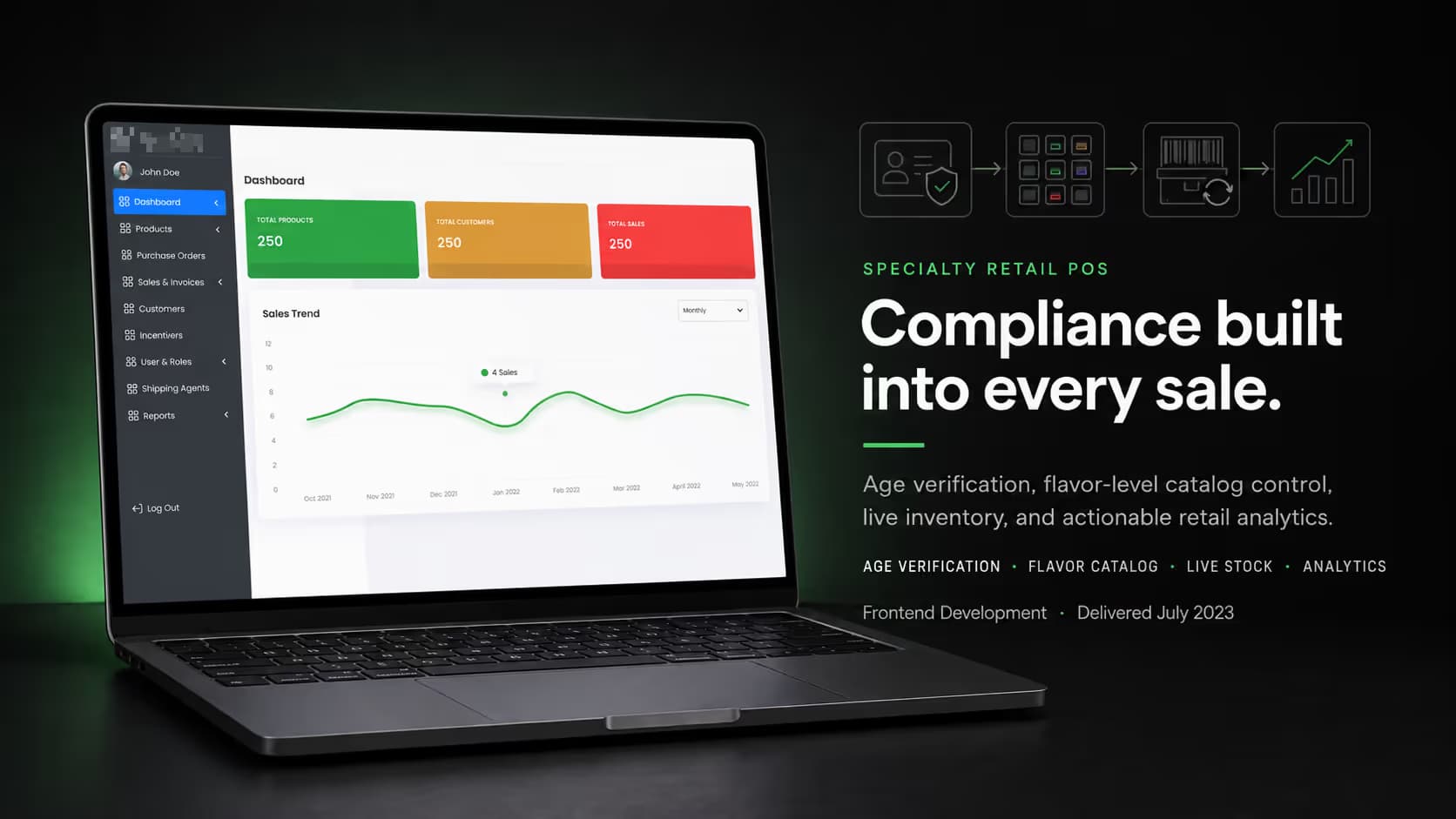
Warehouse-side vendor intake with invoices, receipts, and payments — plus critical-threshold alerts and restock reports for the owner.
Restaurant back office
Menu and pricing management, role-based station views, sales that tally themselves instead of by hand at closing, and inventory forecasting — plus billing with receipts printed in real time through a React Native desktop printer app.
Stack
Built With
- TypeScript
- React
- React Native
- Tailwind CSS
- PHP
- Laravel
- MySQL
- REST APIs
- WebSockets
Client Feedback Summary
Client Feedback
Orders reach the kitchen the moment they are placed, and the sound alert ended the constant walking back and forth. Stock finally matches what we cook.
Client name withheld
Client identity is confidential. This summary reflects verbal feedback shared with Muhammad and the project team.

Facing Similar Challenges?
Let's Talk About What You Need Next.
Share what you are building or improving, and I'll help you identify a practical next step.
Discussion
Comments
No comments yet. Be the first to share your thoughts.